

Gotta Xonix Hands-On: Drawing Lines and Pushing My Luck
Gotta Xonix arrived in my inbox with a straightforward pitch: classic territory capture, a free opening campaign and one purchase for the rest. I played through its first world, Emerald Planet to see what that amounts to in practice.
This idea goes back to Taito’s Qix (1981), an arcade game built around claiming territory while something dangerous roamed the unclaimed space. Xonix (1984) later brought its own version of that formula to DOS computers. Gotta Xonix follows that tradition, adding abilities, objectives and bosses around a familiar temptation. Surely I can grab just a little more territory before that thing reaches me. As it turns out, some skills never leave you.
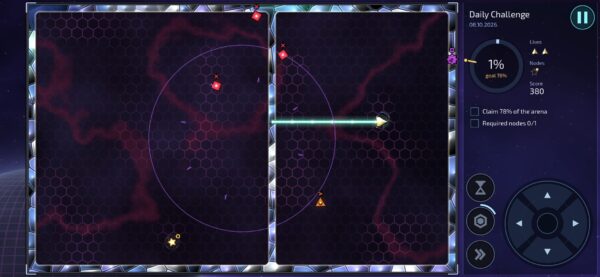
One more slice
You move along safe ground, venture into the dark arena and reconnect your trail to claim territory. While that line is unfinished, it is vulnerable. An enemy catching it costs a life. The opening stages ask you to capture 75% of the arena. Pretty straightforward, until it isn’t.
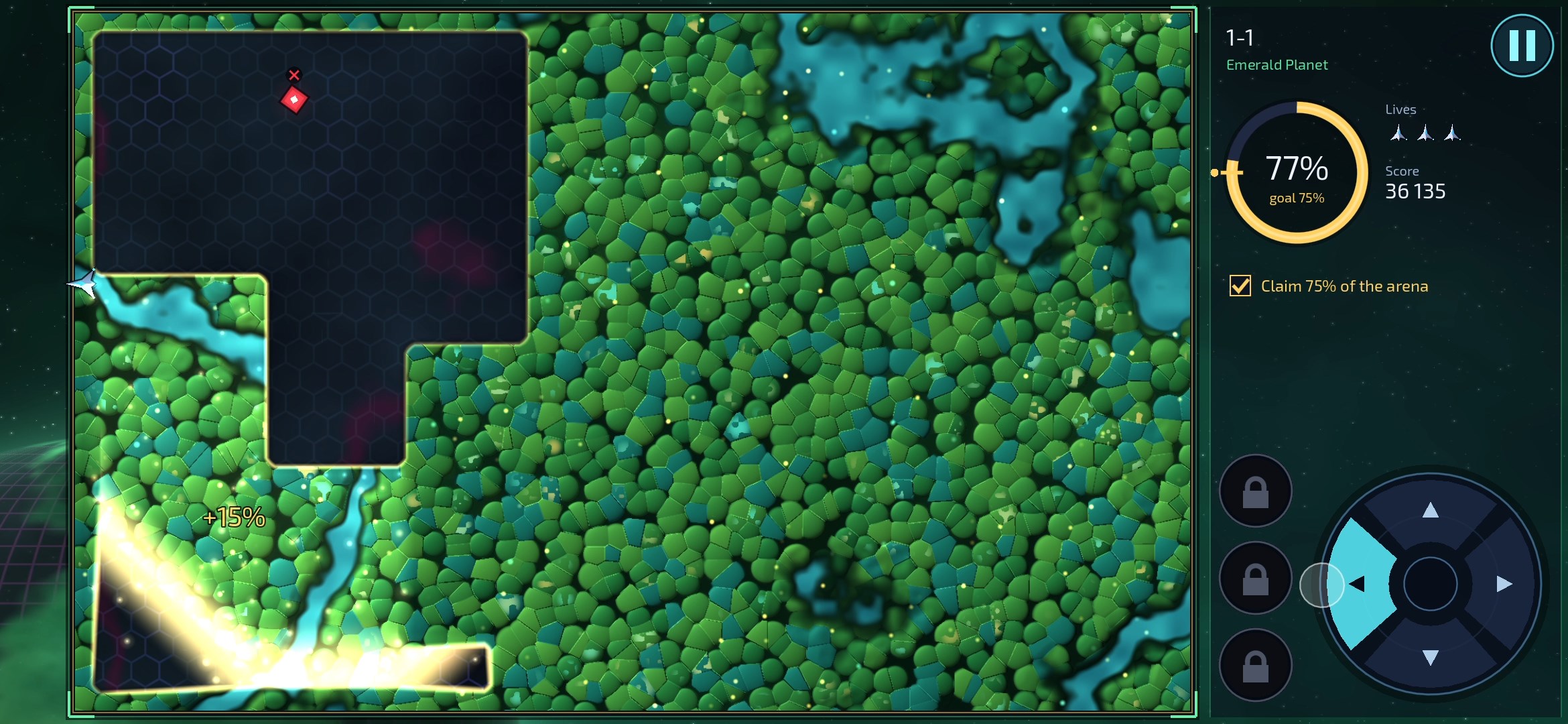
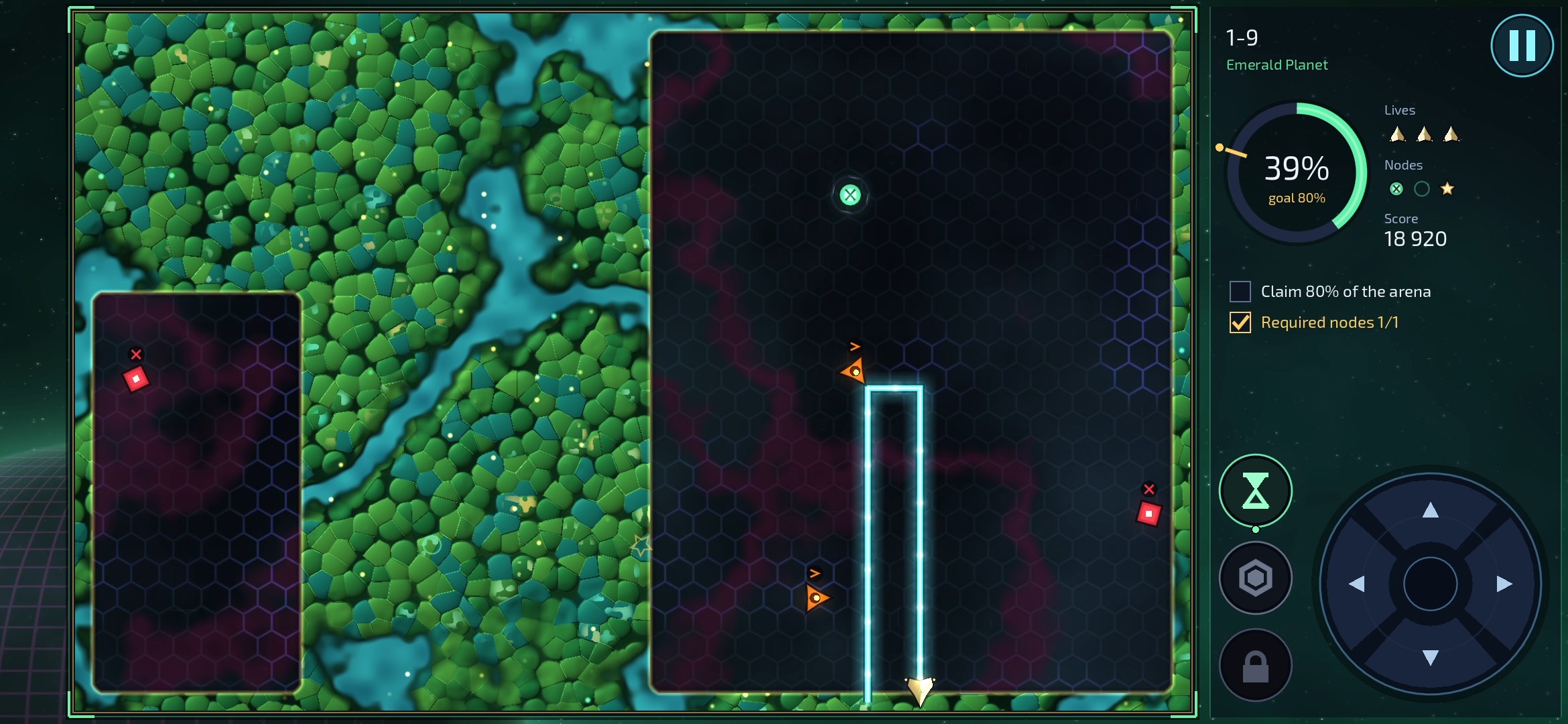
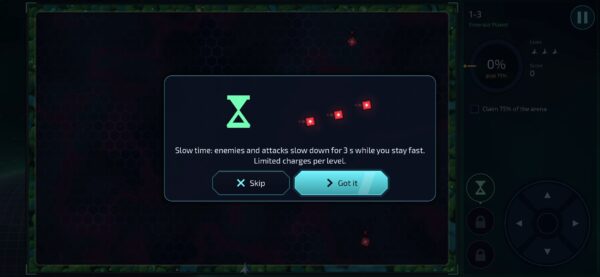
The first world gradually introduces more tools and threats, including a slowdown ability and shields. The shield tutorial explicitly warns that it won’t save you from crossing your own trail, something that happens to me way too often. I remain my own worst enemy…
Level 1-10 changes things with a boss. Free its shield nodes, then trap the core in a sufficiently small area and kill it. A proper and satisfactory finish to wrap up the world.
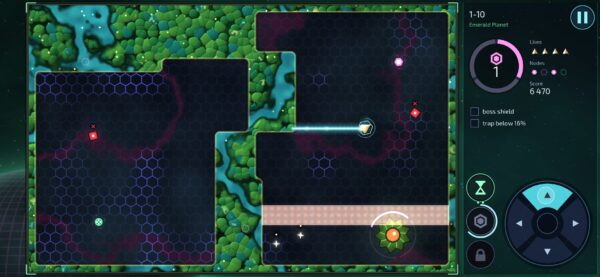
There’s an appealing risk vs reward loop here. Small cuts feel manageable, but a big one clears more area. The medal objectives give you another reason to replay, although one world isn’t enough to judge how varied the full campaign remains.
Controls are fine…
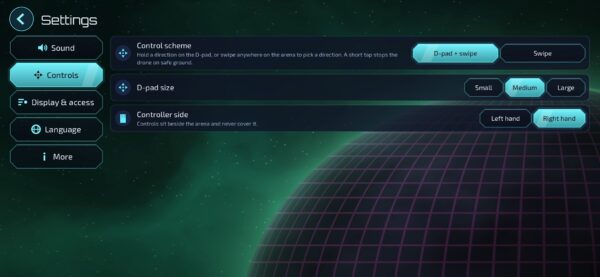
Both swipe controls and the on-screen D-pad are usable, though I have one complaint about the D-pad. You can put the controls on either side and choose the D-pad size as well. Those sound like small options until a game decides where your thumb should live and refuses to negotiate.
The arena stays separate from the control panel, which helps, but I kept feeling like my thumb had slipped off the D-pad. My suggestion here would be to implement strong haptic feedback, or consider adding a joystick (thumbstick) style of controller that vibrates when your finger leaves the zone.
Otherwise, the glowing trail is easy to follow, though the lush background, particles and neon interface can look busy.
I appreciated finding settings for reduced motion, screen shake and flashes. The developer openly disclosed AI-generated artwork and AI-assisted development in the pitch (nice thing to see disclosed).
The price
The first three worlds, containing 30 levels are free. The full campaign has seven worlds and 70 levels. My purchase screen showed $3.53 for a permanent unlock that also removes ads. The developer’s website lists $2.99 as the US price, so check the amount displayed in your region. Paying opens access to the remaining campaign, but you still progress through the levels normally.
In my roughly 15-minute recording, I encountered one skippable full-screen ad after finishing level 1-9, immediately before the first world’s boss. I consider that fair and non-intrusive as it didn’t interrupt an active round and I wasn’t getting an ad after every level.
Worth another world?
Beyond Campaign, the developer mentions Endless with upgrades every five waves, Daily challenges and optional rankings. Campaign and Endless are described as playable offline. I briefly opened Daily, but this hands-on is mainly about the first campaign world, not a full test of every mode or offline behaviour.
The controls cooperate (mostly), the objectives develop beyond filling a meter, and the first boss adds a welcome change. The presentation could be cleaner and the ad is still an ad, but a free 30-level starting point with a single paid unlock is a reasonable offer.
Links
Dejan Balalovski